Currency
 AED
AED
 AFN
AFN
 ALL
ALL
 AMD
AMD
 ANG
ANG
 AUD
AUD
 AWG
AWG
 AZN
AZN
 BAM
BAM
 BBD
BBD
 BDT
BDT
 BIF
BIF
 BND
BND
 BOB
BOB
 BSD
BSD
 BWP
BWP
 BZD
BZD
 CAD
CAD
 CDF
CDF
 CHF
CHF
 CRC
CRC
 CVE
CVE
 CZK
CZK
 DJF
DJF
 DKK
DKK
 DOP
DOP
 DZD
DZD
 EGP
EGP
 ETB
ETB
 EUR
EUR
 FJD
FJD
 FKP
FKP
 GBP
GBP
 GMD
GMD
 GNF
GNF
 GTQ
GTQ
 GYD
GYD
 HNL
HNL
 HUF
HUF
 IDR
IDR
 ILS
ILS
 INR
INR
 ISK
ISK
 JMD
JMD
 JPY
JPY
 KES
KES
 KGS
KGS
 KHR
KHR
 KMF
KMF
 KRW
KRW
 KYD
KYD
 KZT
KZT
 LAK
LAK
 LBP
LBP
 LKR
LKR
 MAD
MAD
 MDL
MDL
 MKD
MKD
 MMK
MMK
 MNT
MNT
 MUR
MUR
 MVR
MVR
 MWK
MWK
 MYR
MYR
 NGN
NGN
 NIO
NIO
 NPR
NPR
 NZD
NZD
 PEN
PEN
 PGK
PGK
 PHP
PHP
 PKR
PKR
 PLN
PLN
 PYG
PYG
 QAR
QAR
 RON
RON
 RSD
RSD
 RWF
RWF
 SAR
SAR
 SBD
SBD
 SEK
SEK
 SGD
SGD
 SHP
SHP
 SLL
SLL
 STD
STD
 THB
THB
 TJS
TJS
 TOP
TOP
 TTD
TTD
 TZS
TZS
 UAH
UAH
 UGX
UGX
 USD
USD
 UYU
UYU
 UZS
UZS
 VND
VND
 VUV
VUV
 WST
WST
 XAF
XAF
 XCD
XOF
XPF
XCD
XOF
XPF
 YER
YER



Description
xPhoenix's Tallest Tree Aloe — Fast-Growing, Dramatic & Drought-Proof
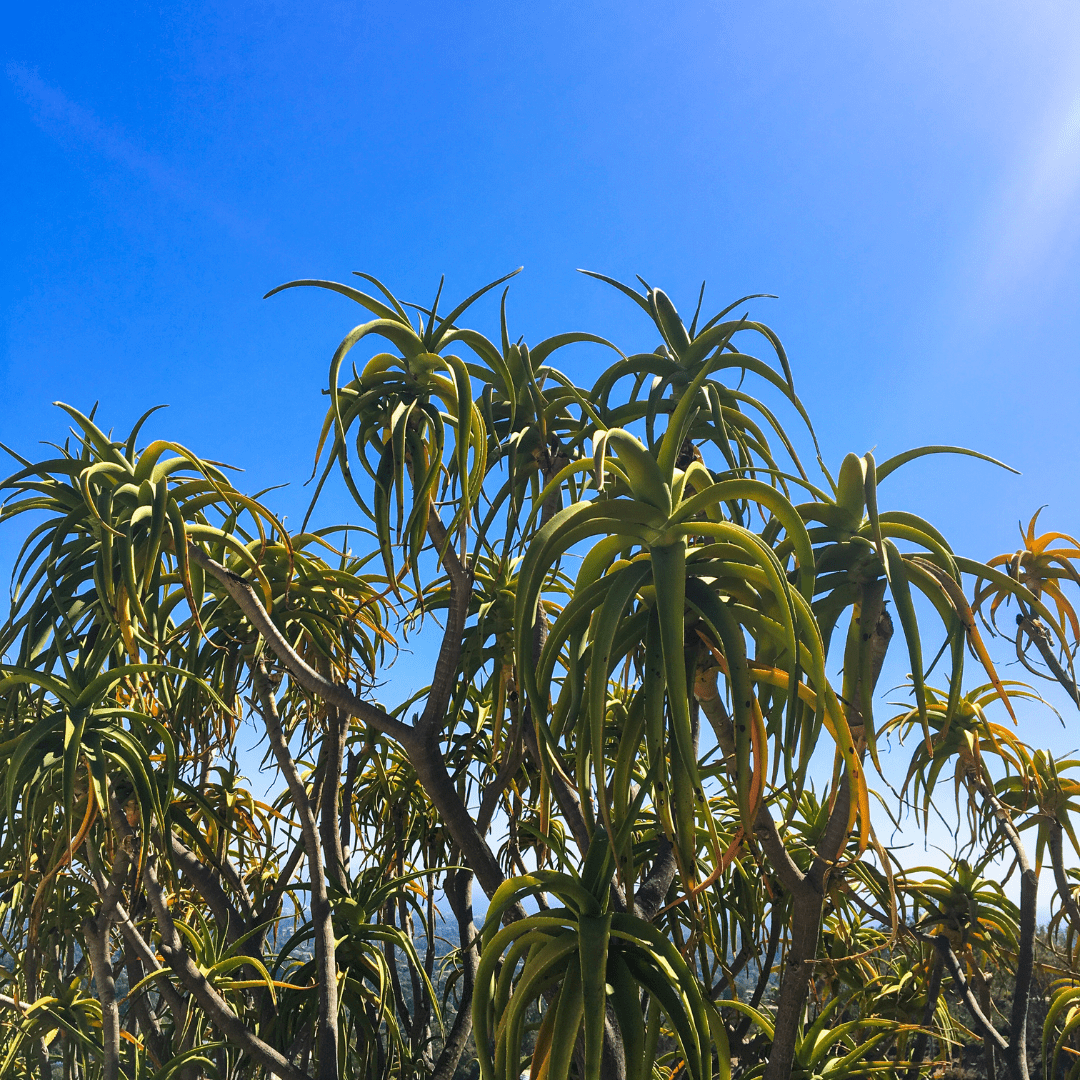
Aloe barberae (Tree Aloe, formerly Aloe bainesii) is the largest aloe species in the world — and it grows surprisingly well in Phoenix's desert climate. This spectacular tree aloe develops a thick, smooth trunk that branches into multiple heads, each crowned with rosettes of gracefully arching green leaves. Over time, it becomes a stunning multi-stemmed specimen tree that can reach 20–30 feet tall, creating a living sculpture unlike anything else in the landscape. In winter, it produces dense clusters of rose-pink tubular flowers that attract hummingbirds. Drought-tolerant and surprisingly fast-growing for its size, Aloe Banseii thrives in full Phoenix sun and handles heat beautifully. Whether you're creating a statement entrance in Scottsdale, adding tropical drama to a Paradise Valley estate, or building an exotic succulent garden in Chandler — this tree aloe delivers unmatched presence.
Aloe Banseii Plant Details
| Attribute | Detail |
|---|---|
| Scientific Name | Aloe barberae (syn. Aloe bainesii) |
| Common Names | Tree Aloe, Aloe Banseii, Bainesii Aloe |
| Mature Height | 20–30 feet |
| Mature Width | 10–15 feet |
| Growth Rate | Moderate to fast — 2–3 feet per year in Phoenix once established |
| Sun | Full sun (6+ hrs). Handles reflected heat from walls and pavement. |
| Water | Low to moderate once established. Drought-tolerant. |
| USDA Zones | 9b–11 (Phoenix is Zone 9b–10a) |
| Soil | Well-draining required. Adapts to Arizona caliche and rocky native soils. |
| Foliage | Evergreen — gracefully arching dark green leaves in terminal rosettes |
| Bloom | Rose-pink tubular flowers in dense clusters, winter |
Aloe Banseii Uses in Phoenix Landscapes
Statement Specimen Tree
A mature Tree Aloe is a jaw-dropping focal point in any landscape. Its smooth, sculptural trunk and branching canopy create an exotic, almost prehistoric presence that dominates front yards, courtyards, and estate entries. In Scottsdale and Paradise Valley, mature specimens are prized for their rarity and visual impact — a single tree can transform an entire property.
Tropical-Desert Fusion Gardens
Pair Aloe Banseii with Desert Museum Palo Verde, Bougainvillea, and Yellow Bells for a lush, tropical look that still thrives on minimal water. The tree aloe's broad canopy and arching leaves soften the hard lines of desert architecture while maintaining a drought-tolerant palette perfect for Mesa, Gilbert, and Tempe landscapes.
Pool-Friendly Shade Tree
Unlike many shade trees, Aloe Banseii produces minimal leaf litter and has non-invasive roots, making it an excellent choice near pools and patios. Its dappled shade provides relief from Phoenix summer sun without the maintenance headaches of messy deciduous trees.
Best Time to Plant Aloe Banseii in Phoenix
Fall (October–November) is the ideal planting window. Warm soil promotes rapid root establishment while cooler air reduces transplant stress. Spring (February–April) is the second-best window. Protect young plants from frost in the first 1–2 winters if temperatures dip below 28°F — established trees handle brief freezes better.
How to Plant Aloe Banseii
- Dig wide, not deep — 2–3x the root ball width, same depth as the container.
- Check for caliche — break through any hardpan layer to ensure drainage.
- Backfill with native soil — a light 20% organic amendment is fine.
- Spacing — allow 10–15 ft from structures and other trees for mature spread.
- Stake if needed — tall specimens may need temporary staking for the first year until roots establish.
- Mulch — 2–3 inches of gravel or bark mulch around the base to retain moisture.
Watering Aloe Banseii in Phoenix
First Year Watering Schedule
- Weeks 1–2: Every 2–3 days, deep and slow (20–30 min)
- Month 1–2: Every 4–5 days
- Month 3–6: Every 7–10 days (every 5–7 days in peak summer)
- After Year 1: Every 10–14 days in summer; every 3–4 weeks in winter
Drip Irrigation
Use 2–3 emitters at 2 GPH placed 18–24 inches from the trunk. Tree Aloe appreciates slightly more water than smaller aloe species during its first few years while establishing. Once mature, it's quite drought-tolerant but grows faster with occasional deep watering.
How fast does Aloe Banseii grow in Phoenix?
Surprisingly fast for a tree aloe — expect 2–3 feet of height gain per year once established. Young plants may be slow for the first year as they build their root system, then growth accelerates dramatically.
How big does Tree Aloe get?
In Phoenix, mature specimens reach 20–30 feet tall with a 10–15 foot spread. The branching trunk and multiple rosette heads create a canopy reminiscent of a small tropical tree.
Is Aloe Banseii frost tolerant?
Established trees handle brief freezes to about 25°F. Young plants are more sensitive — protect them with frost cloth if temperatures drop below 28°F during the first 1–2 winters. Phoenix's urban heat island effect provides additional protection in most Valley locations.
Does Tree Aloe attract hummingbirds?
Yes. The dense clusters of rose-pink tubular flowers bloom in winter when few other plants are flowering, making Aloe Banseii one of the most important hummingbird food sources during the cooler months.
You May Also Like
- Aloe vera — the classic landscape aloe, perfect as an understory plant beneath Tree Aloe.
- African/Tiger Aloe — a compact spotted aloe that pairs beautifully at the base of tree aloes.
- Yellow Bells (Tecoma stans) — a fast-growing flowering companion that adds vibrant color.
- Desert Museum Palo Verde — another sculptural tree for creating a dramatic mixed planting.
How Many Aloe Banseii Do I Need?
Tree Aloe is a large specimen tree (10 to 15 feet wide at maturity), so it is almost always planted singly as a focal point rather than in a hedge. Give one tree center stage in a courtyard, entry, or poolside bed. For a grove effect on a larger property, plant in an odd-numbered group of 3 spaced 12 to 15 feet apart so each branching canopy has room to develop. Allow at least 8 to 10 feet of clearance from walls, roof lines, and other trees:
| Planting Goal | Spacing & Count |
|---|---|
| Single focal specimen | 1 tree, 10+ ft from structures |
| Small grove / cluster | 3 trees, 12 to 15 ft apart |
| Informal screen line | 1 tree every 12 ft along the run |
Aloe Banseii Season-by-Season in Phoenix
- Spring (Feb to Apr): Strong growth flush as the soil warms; this is when the 2 to 3 feet of annual height is gained. A good second planting window once frost risk has passed.
- Summer (May to Sep): Thrives in full sun and reflected heat. Its broad canopy throws welcome dappled shade. Appreciates occasional deep summer water, and the monsoon rains push fast growth in fast-draining soil.
- Fall (Oct to Nov): The best planting window. Warm soil lets roots establish before the cool season, which is important for getting a young tree through its first winter.
- Winter (Dec to Jan): Peak bloom, with dense rose-pink flower clusters feeding hummingbirds when little else is flowering. Established trees take brief dips to about 25°F; protect young trees with frost cloth below 28°F for the first one to two winters.
At a Glance
✔ Hummingbird-Friendly ✔ Heat-Loving (Reflected-Heat Tolerant) ✔ Drought-Tolerant ✔ Pool-Friendly (Low-Litter) ✔ Evergreen ✔ Low-Maintenance ✔ Shade-Providing
Plant It With
- Aloe Vera: A classic understory aloe to carpet the ground beneath the tree's canopy.
- African/Tiger Aloe: A compact banded aloe that nestles at the base of the smooth trunk.
- Blue Elf Aloe: Blue-green clumps and orange winter blooms that layer color under the tree.
- Desert Spoon: A silver rosette that adds mid-height structure in the same low-water bed.
Is Aloe Banseii Right for Your Yard?
Tree Aloe thrives in full sun, in fast-draining caliche or rocky native soil with room to reach 20 to 30 feet, and is ideal as a low-litter, non-invasive specimen near pools, courtyards, and entries where most shade trees are too messy. It handles reflected heat and, once established, brief winter cold to about 25°F. It is not a fit for a small, tight yard with no vertical room, or for a frost-pocket low spot where young plants will be damaged before they can establish.
- Choosing a selection results in a full page refresh.