Currency
 AED
AED
 AFN
AFN
 ALL
ALL
 AMD
AMD
 ANG
ANG
 AUD
AUD
 AWG
AWG
 AZN
AZN
 BAM
BAM
 BBD
BBD
 BDT
BDT
 BIF
BIF
 BND
BND
 BOB
BOB
 BSD
BSD
 BWP
BWP
 BZD
BZD
 CAD
CAD
 CDF
CDF
 CHF
CHF
 CRC
CRC
 CVE
CVE
 CZK
CZK
 DJF
DJF
 DKK
DKK
 DOP
DOP
 DZD
DZD
 EGP
EGP
 ETB
ETB
 EUR
EUR
 FJD
FJD
 FKP
FKP
 GBP
GBP
 GMD
GMD
 GNF
GNF
 GTQ
GTQ
 GYD
GYD
 HNL
HNL
 HUF
HUF
 IDR
IDR
 ILS
ILS
 INR
INR
 ISK
ISK
 JMD
JMD
 JPY
JPY
 KES
KES
 KGS
KGS
 KHR
KHR
 KMF
KMF
 KRW
KRW
 KYD
KYD
 KZT
KZT
 LAK
LAK
 LBP
LBP
 LKR
LKR
 MAD
MAD
 MDL
MDL
 MKD
MKD
 MMK
MMK
 MNT
MNT
 MUR
MUR
 MVR
MVR
 MWK
MWK
 MYR
MYR
 NGN
NGN
 NIO
NIO
 NPR
NPR
 NZD
NZD
 PEN
PEN
 PGK
PGK
 PHP
PHP
 PKR
PKR
 PLN
PLN
 PYG
PYG
 QAR
QAR
 RON
RON
 RSD
RSD
 RWF
RWF
 SAR
SAR
 SBD
SBD
 SEK
SEK
 SGD
SGD
 SHP
SHP
 SLL
SLL
 STD
STD
 THB
THB
 TJS
TJS
 TOP
TOP
 TTD
TTD
 TZS
TZS
 UAH
UAH
 UGX
UGX
 USD
USD
 UYU
UYU
 UZS
UZS
 VND
VND
 VUV
VUV
 WST
WST
 XAF
XAF
 XCD
XOF
XPF
XCD
XOF
XPF
 YER
YER


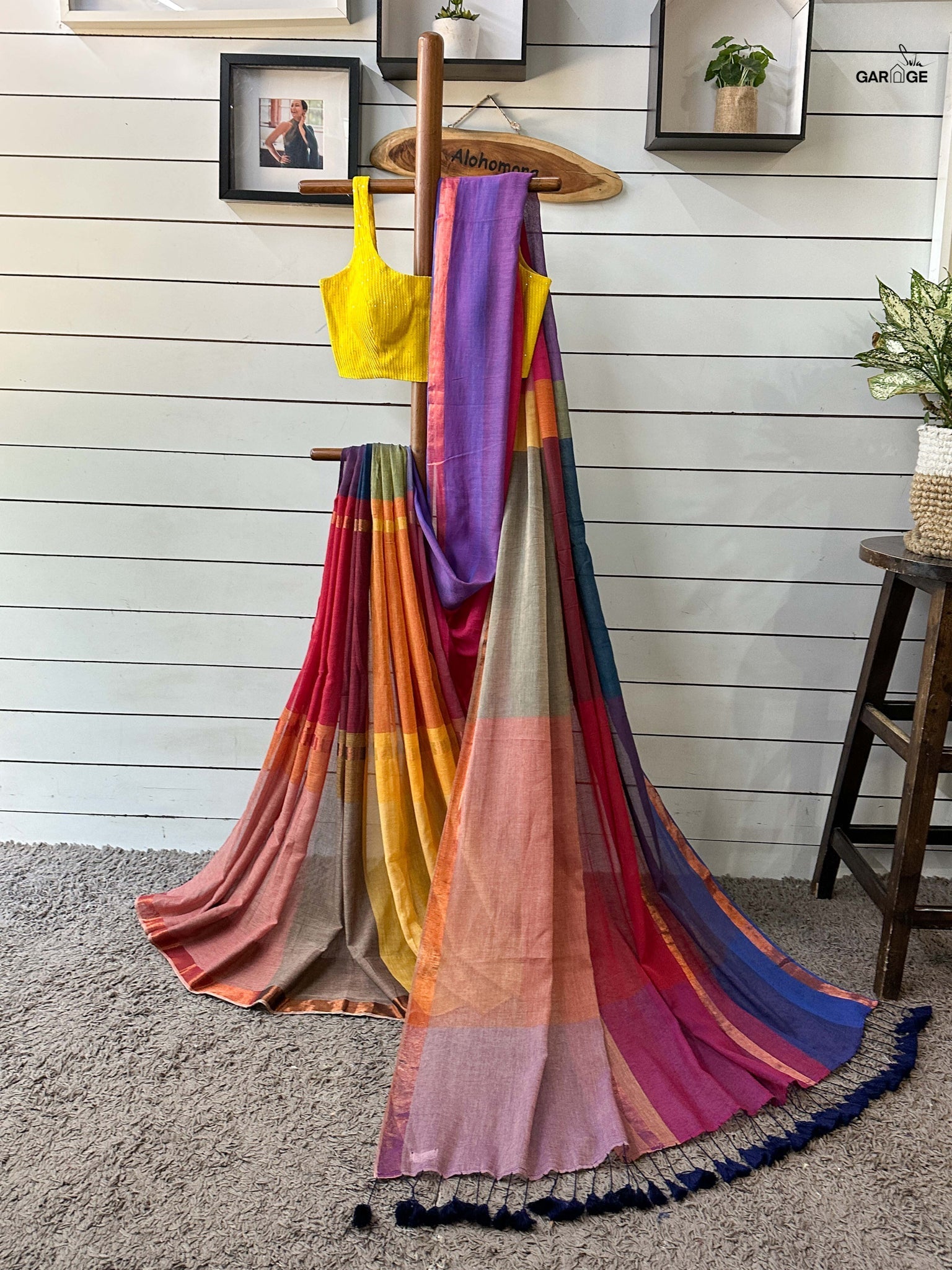

Description
xDetails
Length: 5.50 m (550.00 cm) ; Width: 1.19 m (119.38 cm)
Blouse Piece: No
Wash Care:
1. Hand wash separately in cold water and salt
2. Don't soak it in water for more than 5 minutes
3. Medium iron
Note: The mannequin is wearing a blouse called Citrine Bling
Fabric: Mul Cotton
Defect: Stain On Pallu And Weaving Defect And Thread Shift On Whole Saree
Disclaimer: The pictures are clicked in daylight. Color may vary slightly from the image due to the screen brightness.
Note: Suta Garage sarees may or may not have fall and edging.
Description
The mul cotton is what we call ˜Made in Heaven at Suta. Known in West Bengal as mul mul, the fabric is what can be categorised as muslin cotton. It is believed that this fine method of weaving cotton can be traced back to even before the Indus valley civilisation. What makes this fabric special is the almost magical process of weaving it. Cotton fibres are separated and spun into strong threads. The lightest and the most delicate fibres are separated and are then spun into muslin thread. These are then woven into fabrics by skilled weavers. The history of muslin weaving is a beautiful chapter in the history of Indian textiles. The process of the yore was much more complex and involved many unique tools that look primitive but worked like magic. The upper jaw of a catfish was used to initially clean the cotton before spinning. To separate the lightest fibres, a Dhunkar (a bamboo bow) was used, which when strung in a distinctive way made the lighter fibres rise above the heavier ones. This process gave the title ˜woven air to the muslin fabric. Weavers famously wove on looms that were at ground level and operated the looms from pits dug in the ground. Even during the Mughal era, the muslin fabric was seen as a symbol of power for its finesse. History is full of anecdotes to prove the awe that the muslin fabric generated. Emperor Aurangzeb is said to have chided his daughter Zeb-un-Nisa for appearing naked in the court when in reality she had been wearing several layers of the muslin cloth! Such was the fabrics delicateness. The almost invisible fabric had made an Arab traveller in the 10th century remark that the degree of fineness is such that a garment can be drawn through a ring of a middling size. During the British colonisation and even during the Mughal rule, the art of weaving muslin took a hit as weavers were treated poorly and drought hit many of the weaving centres. As a result, today, the process of weaving has seen a lot of change. Nevertheless, the essence of it hasnt changed and the charm of the fabric still remains.


- Choosing a selection results in a full page refresh.